
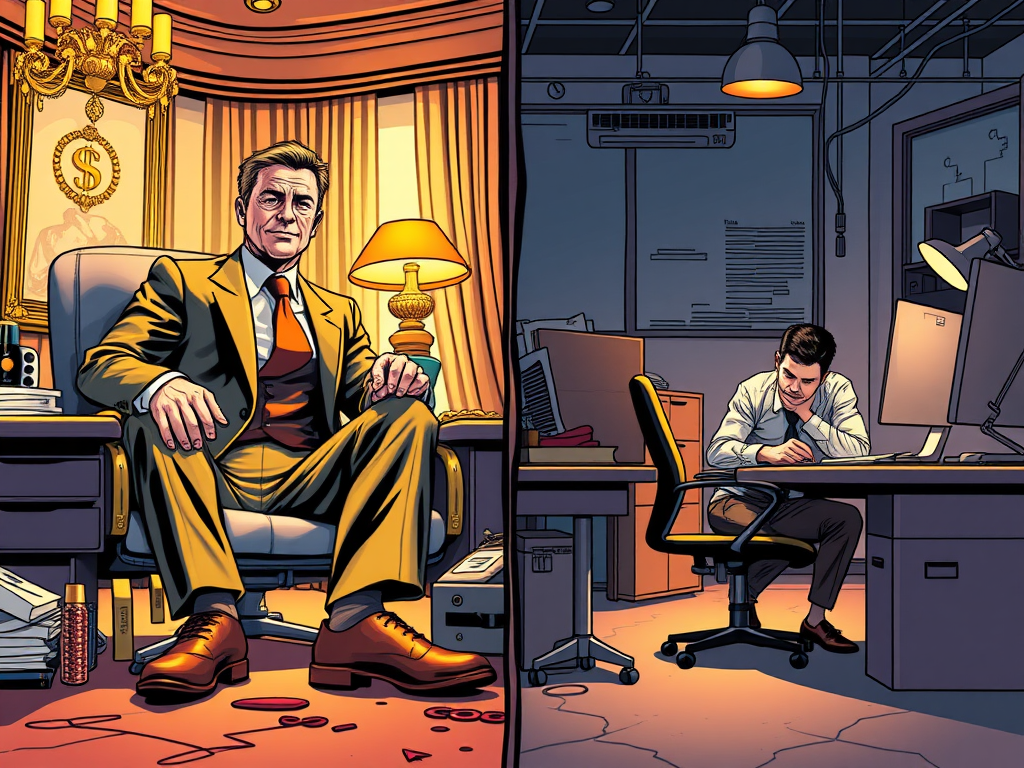
The disparity in pay between CEOs and regular employees often sparks debate.
In light of recent events which unfolded regarding the killing of CEO and their replacement,the question arises: Does any CEO deserve to be paid 100 times that of an average employee?
If your CEO can be replaced by another person the next day(after your death or exit) and there is no visible impact to your company or profit , then you didn’t deserve to be compensated at the expense of your employees. Maybe the company could have saved millions of dollars by paying you less. There will be countless folks disagreeing with my opinion by stating below cases:
1. High Responsibility and Accountability
CEOs are responsible for the overall performance of the company, making decisions that affect thousands of employees, shareholders, and the company’s future. Their success or failure has outsized impacts.
- Reality: Many decisions are made collectively, with inputs from other C-suite executives and boards, reducing the CEO’s singular influence.
2. Rare Skill Set
The role of a CEO requires a mix of leadership, strategic vision, financial acumen, and experience. Individuals with this combination of skills are rare and therefore command a premium.
- Reality: Many CEOs are hired from within the company, indicating that others in the organization may already possess similar skills.
3. Market Dynamics
Boards of directors determine CEO pay based on market rates to attract and retain top talent. Companies compete for “proven” executives, which drives up compensation.
- Reality: CEO hiring often happens through a small, insular network. This limits competition and artificially inflates salaries.
4. Risk and Job Security
CEO roles are high-risk; they face immense scrutiny and can be replaced for underperformance. High pay compensates for this risk.
- Reality: CEOs often receive golden parachutes (lucrative exit packages) even when they fail, reducing personal risk.
5. Long-Term Impact
Effective CEOs can create massive long-term value for a company through strategic decisions, innovation, and navigating crises.
- Reality: Studies show that external factors (e.g., market conditions) and collective effort often have a larger impact than the CEO’s actions alone.
6. Equity-Based Compensation
Much of a CEO’s pay comes in stock options or performance bonuses, tying their wealth to the company’s success.
- Reality: This can incentivize short-term stock price boosts over sustainable growth and employee well-being.
Why CEOs May Seem Replaceable
- Standardized Skill Sets: Many CEOs share similar educational and professional backgrounds (e.g., MBAs, prior executive roles), suggesting that they are not uniquely irreplaceable.
- Internal Promotion Pools: Successful companies often cultivate internal talent capable of taking over the CEO role.
Broader Critiques
- Income Inequality: The growing pay gap contributes to societal disparities, with regular employees seeing little of the wealth generated by companies.
- Performance vs. Pay Disconnect: High CEO pay doesn’t always correlate with company performance, leading to criticism of compensation structures.
Ultimately, while the rationale for high CEO pay is tied to market dynamics and perceived value, the fairness and justification for this disparity remain hotly debated.
My opinion: Corporate suckers will continue to be gaslighted into thinking these CEOs are high performing individuals who take these live or die decisions on a daily basis when the reality is far away from it. Its corporates sucking us dry to fulfil their never ending greed and that’s the end of story.
 MEDIAPEDIA
Leave a comment