
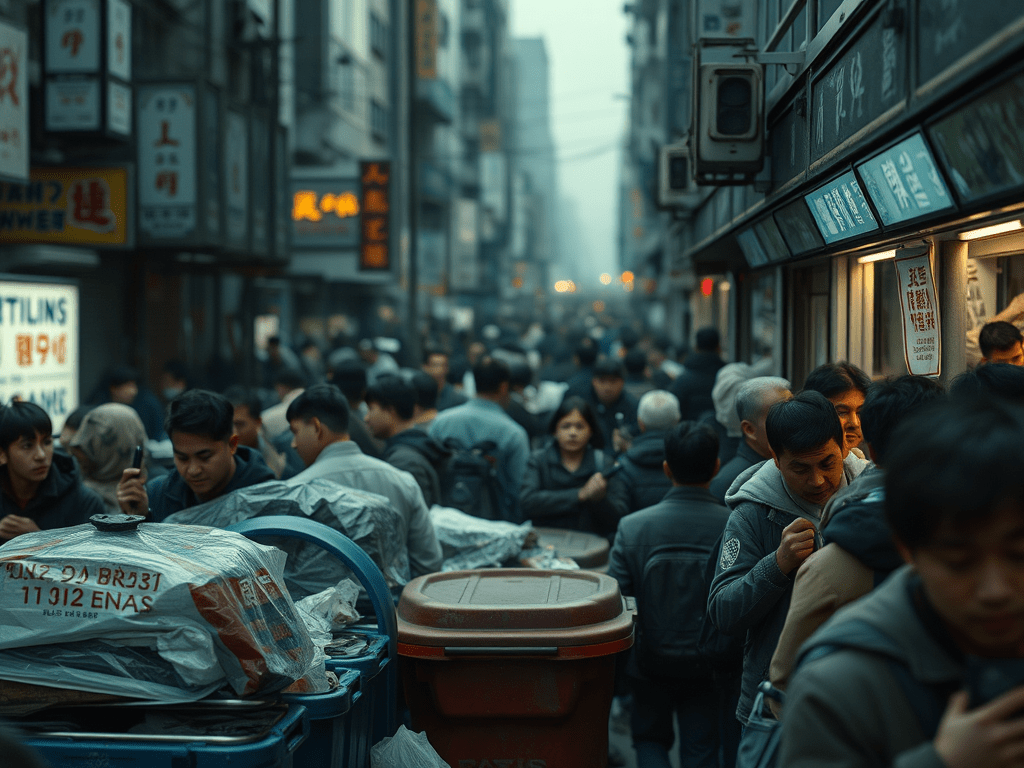
Civic sense refers to the basic etiquette and responsibilities that individuals have toward their society, such as following traffic rules, maintaining cleanliness, respecting public property, and behaving considerately in shared spaces. Unfortunately, in many high-density urban areas, a noticeable decline in civic sense is often observed. While there are multiple factors influencing this, population density plays a crucial role.
How Population Density Contributes to the Decline of Civic Sense
- Overburdened Infrastructure and Resources
High population density strains public services such as sanitation, transportation, and waste management. When infrastructure fails to meet the demands of the population, people may develop a sense of resignation and neglect. Overflowing garbage bins, clogged public restrooms, and inadequate road maintenance contribute to a vicious cycle where individuals feel little incentive to maintain public hygiene. - Anonymity and Reduced Social Accountability
In less populated areas, individuals are more likely to know their neighbors and feel a sense of collective responsibility. In densely populated cities, however, the anonymity afforded by large crowds can reduce social accountability. This detachment makes it easier for individuals to litter, ignore traffic rules, or deface public property, believing that their actions will go unnoticed. - Competition for Space Leading to Self-Centered Behavior
When too many people share limited resources, competition for personal space and comfort can breed selfishness. This is evident in overcrowded public transport, where individuals may push, shove, or ignore queues, and in traffic congestion, where lane-cutting and signal violations become rampant. - Diminished Sense of Ownership
In highly populated areas, people often feel disconnected from their surroundings. Unlike in smaller communities where local pride fosters civic responsibility, individuals in crowded cities might feel that public spaces are not their concern, leading to negligence and misuse. - Stress and Desensitization
The daily stress of navigating a densely populated environment can desensitize individuals to civic responsibilities. When people constantly deal with overcrowding, noise pollution, and chaotic traffic, they may prioritize personal convenience over social responsibility, reinforcing bad habits like honking unnecessarily, ignoring pedestrian rights, or throwing trash in public places.
How to Improve Civic Sense in High-Density Areas
Since reducing population density in cities is not a practical solution, we must focus on mitigating its effects by fostering civic responsibility. Here are some approaches:
- Education and Awareness Campaigns
Schools and workplaces should integrate civic education into their curriculums and policies. Public awareness campaigns using media, social platforms, and community events can reinforce the importance of civic sense. - Stronger Law Enforcement and Penalties
Governments must implement and enforce strict penalties for civic violations. Heavier fines for littering, traffic offenses, and vandalism can act as deterrents, making individuals more accountable for their actions. - Improved Public Infrastructure
Investing in better waste management, public restrooms, and transportation systems can encourage responsible behavior. When people see well-maintained facilities, they are more likely to respect and preserve them. - Community Involvement Programs
Encouraging local communities to participate in cleanliness drives, neighborhood watch groups, and urban development discussions can foster a sense of ownership and responsibility for public spaces. - Behavioral Nudges and Technological Solutions
Simple nudges, such as strategically placed dustbins, designated pedestrian zones, and automated traffic signals, can influence behavior positively. Mobile apps that allow citizens to report civic violations can also encourage accountability and prompt authorities to take swift action.
While population density undeniably contributes to the erosion of civic sense, it is not an insurmountable challenge. With a combination of education, enforcement, infrastructure development, and community participation, we can cultivate a more responsible and considerate society. Instead of resigning to the chaos of high-density living, individuals and authorities must actively work together to foster a culture of civic responsibility.
 MEDIAPEDIA
Leave a comment